
ENSO ADVISORY NO.6 104 PM EDT Tue. Sep. 15, 2026
SYNOPSIS
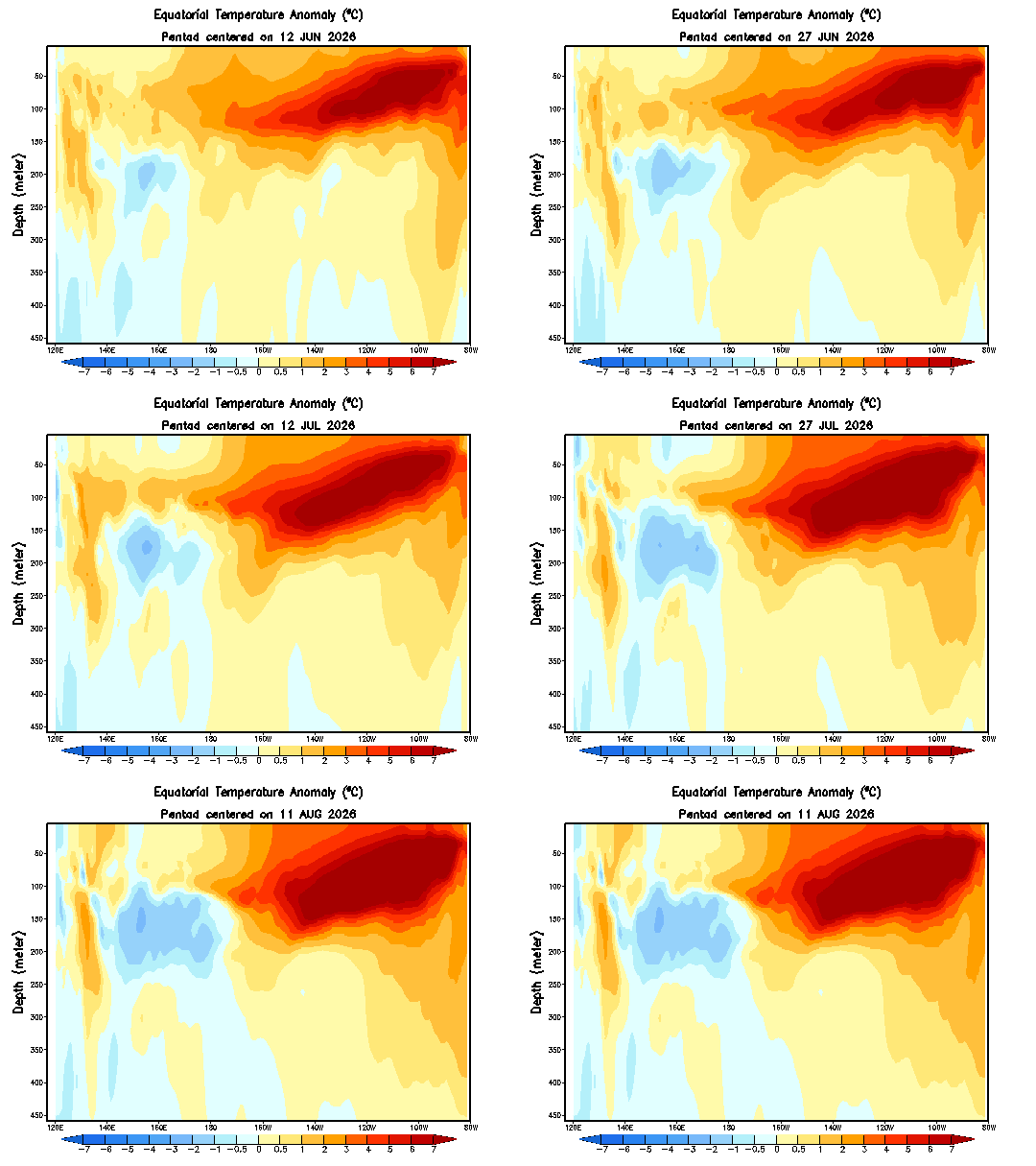
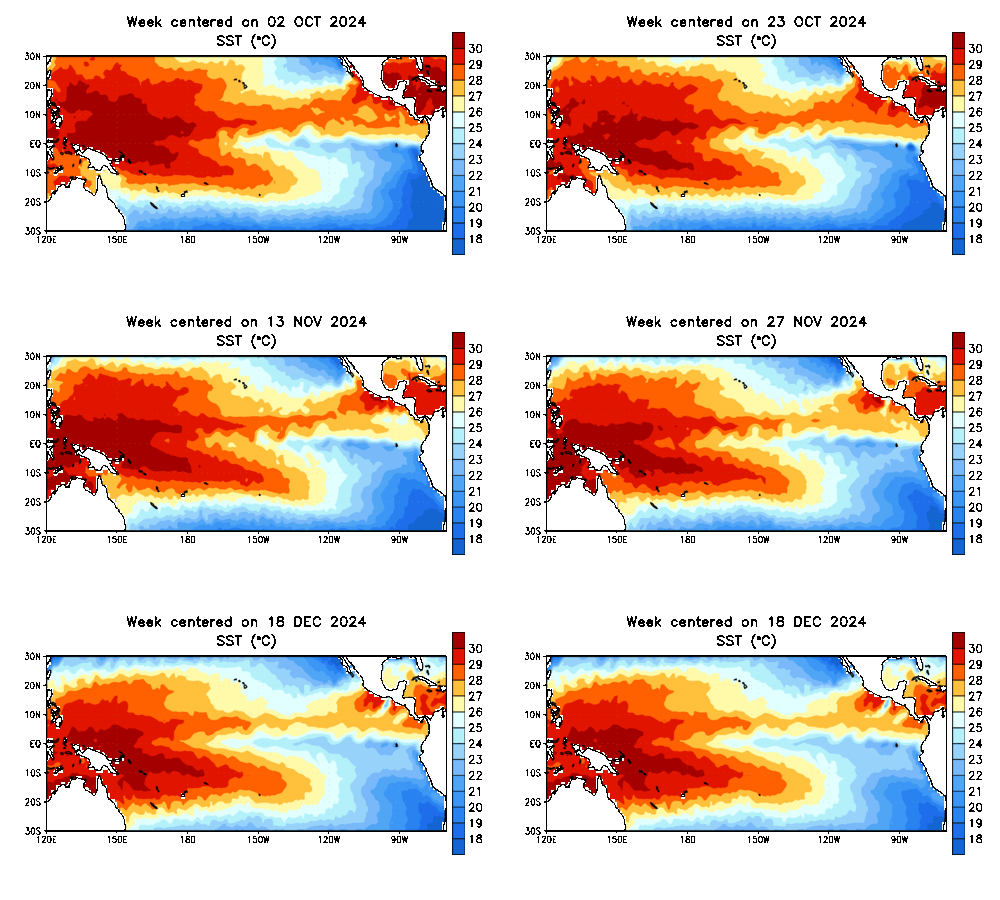
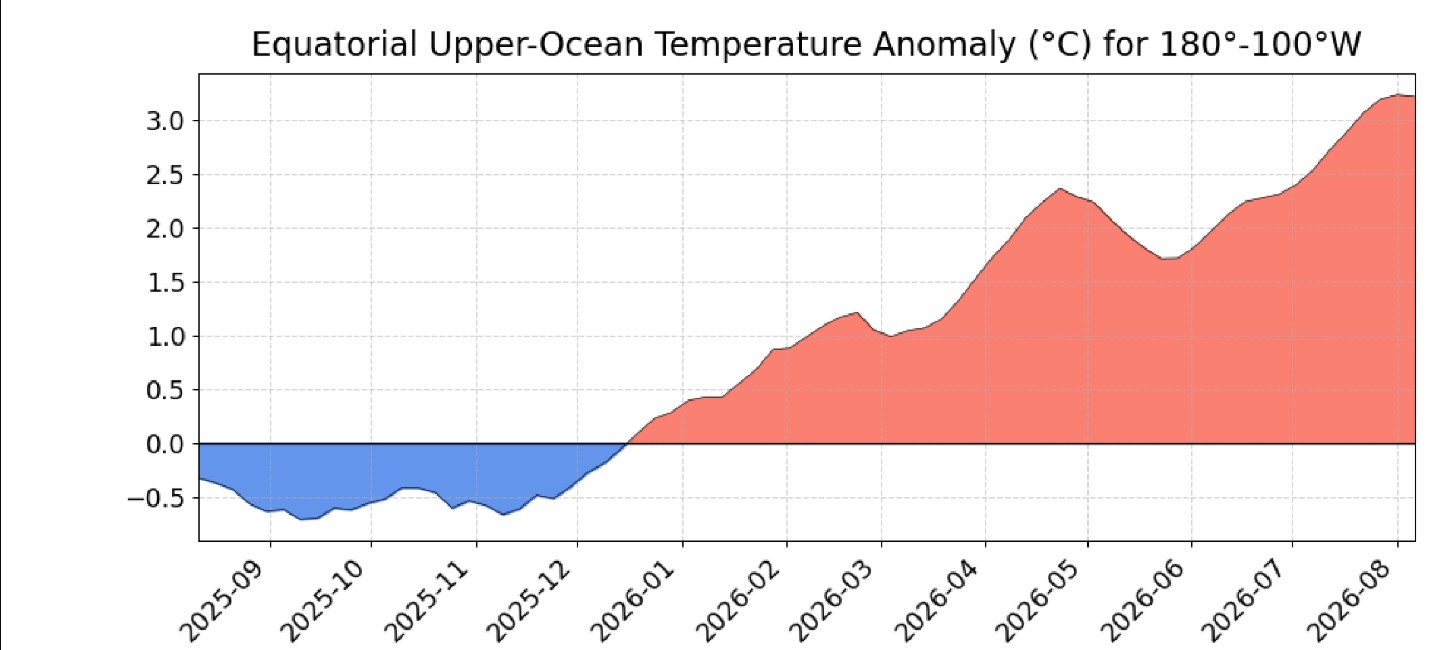
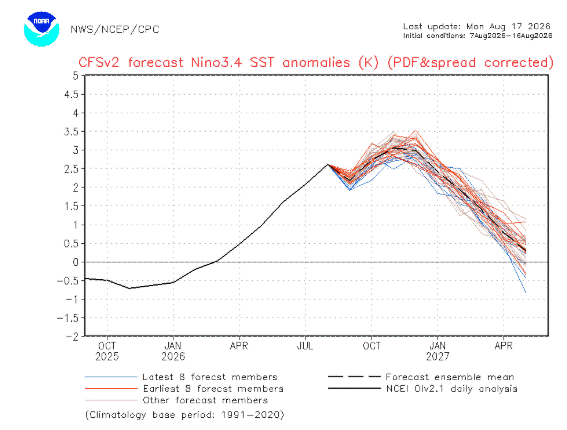
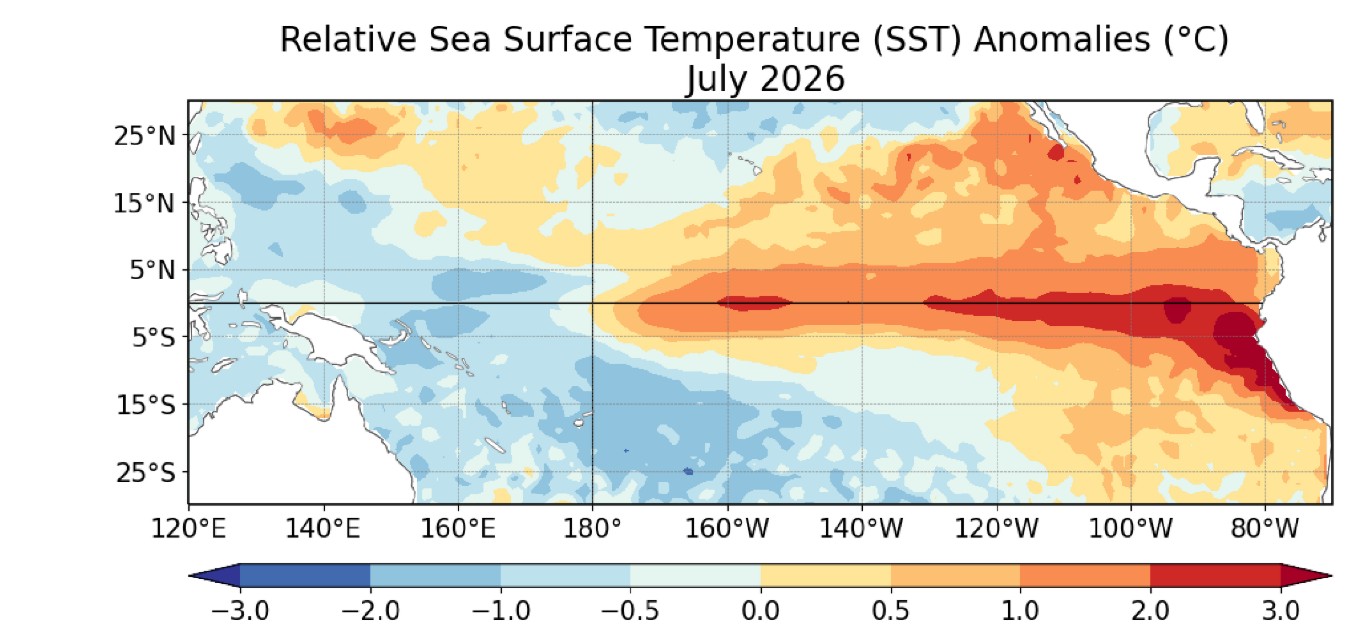
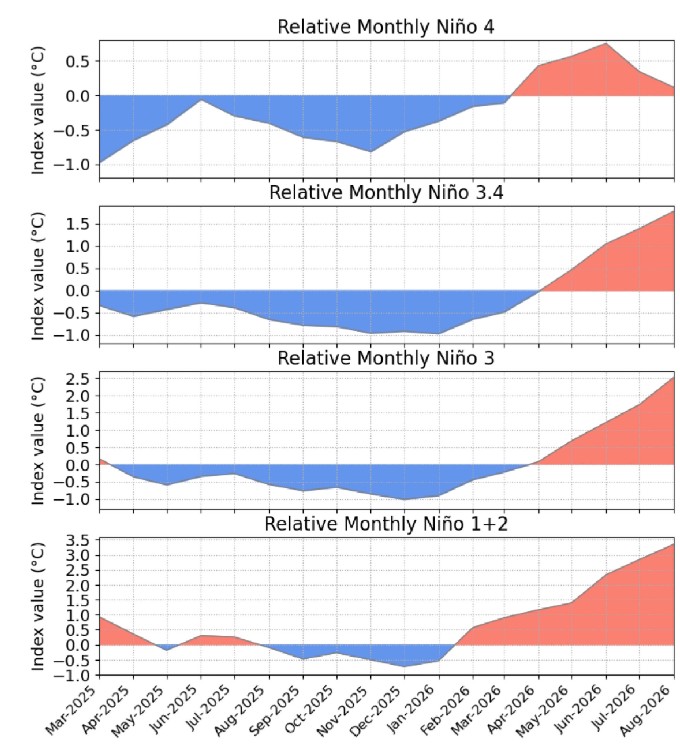
El Niño is strong and intensifying. The Niño 3.4 observations have risen to around +2°C or higher, with weekly values recently reaching roughly +2.7°C. The eastern Pacific is particularly warm, with August anomalies exceeding +3°C in parts of the eastern equatorial Pacific. The atmosphere is responding strongly—negative SOI, weakened trade winds, and enhanced convection across the central and eastern Pacific are all consistent with a mature El Niño. Subsurface temperatures show a large reservoir of anomalously warm water beneath the central and eastern equatorial Pacific, providing additional fuel for continued surface warming.
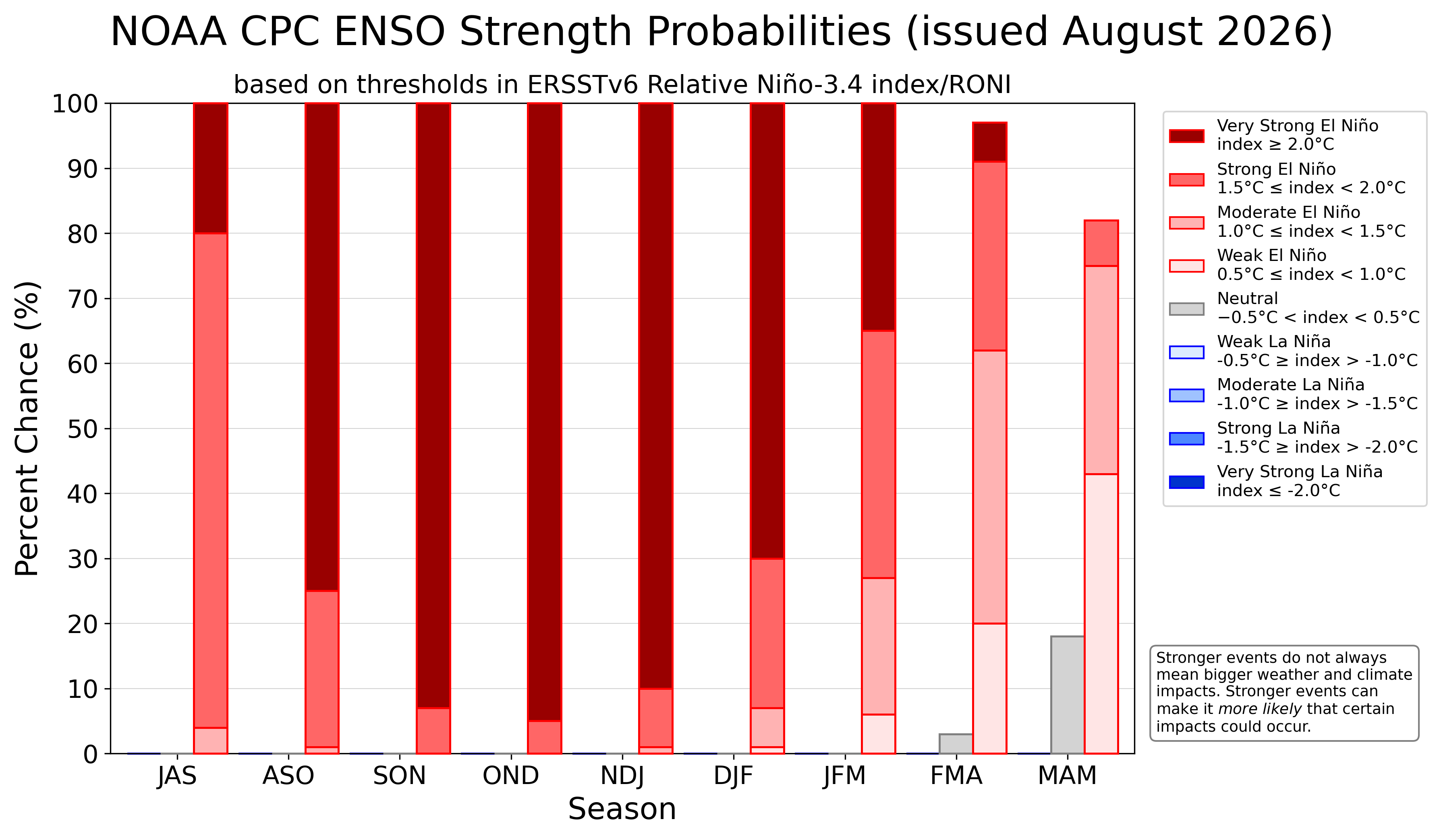
NOAA's September assessment gives about a 98% chance of a "very strong" El Niño (RONI ≥ +2°C) for October–December 2026, and approximately a 75% chance of an historically strong event. IRI's latest assessment is similarly extraordinary: 25 of 26 models forecast Niño 3.4 ≥ +2°C for OND, while 15 of 26 projected≥ +3°C.
So this isn't merely a conventional El Niño. The current forecasts are pointing toward a potentially top-tier event.
EFFECT
During a strong El Niño, the most significant driver of U.S. winter weather is the behavior of the Pacific jet stream. As warmer-than-average waters build up in the equatorial Pacific, this high-altitude ribbon of fast-moving air intensifies and shifts southward, draping itself across the southern United States. This southern shift acts as a conveyor belt for moisture and alters where storms track across the continent.
FORECAST
During a strong El Niño, the most significant driver of U.S. winter weather is the behavior of the Pacific jet stream. As warmer-than-average waters build up in the equatorial Pacific, this high-altitude ribbon of fast-moving air intensifies and shifts southward, draping itself across the southern United States. This southern shift acts as a conveyor belt for moisture and alters where storms track across the continent.
For the U.S. weather pattern, this is a major deal. A very strong El Niño can substantially alter the jet-stream configuration, subtropical jet, storm track, precipitation distribution, and temperature patterns as we head into winter. October is expected to be warm in the East and cool in the West with increased storminess across the South. November is expected to be cool in the West with wet, stormy conditions in the South and East. December is expected to bring cold shots to the East with continued storminess in the South and East. January has the greatest chances for cold in the East with an active storm track, and February will remain active.
ENSO Live Dashboard
Loading data...
 Jim Munley, Jr.
http://www.www.jimmunlwywx.com/